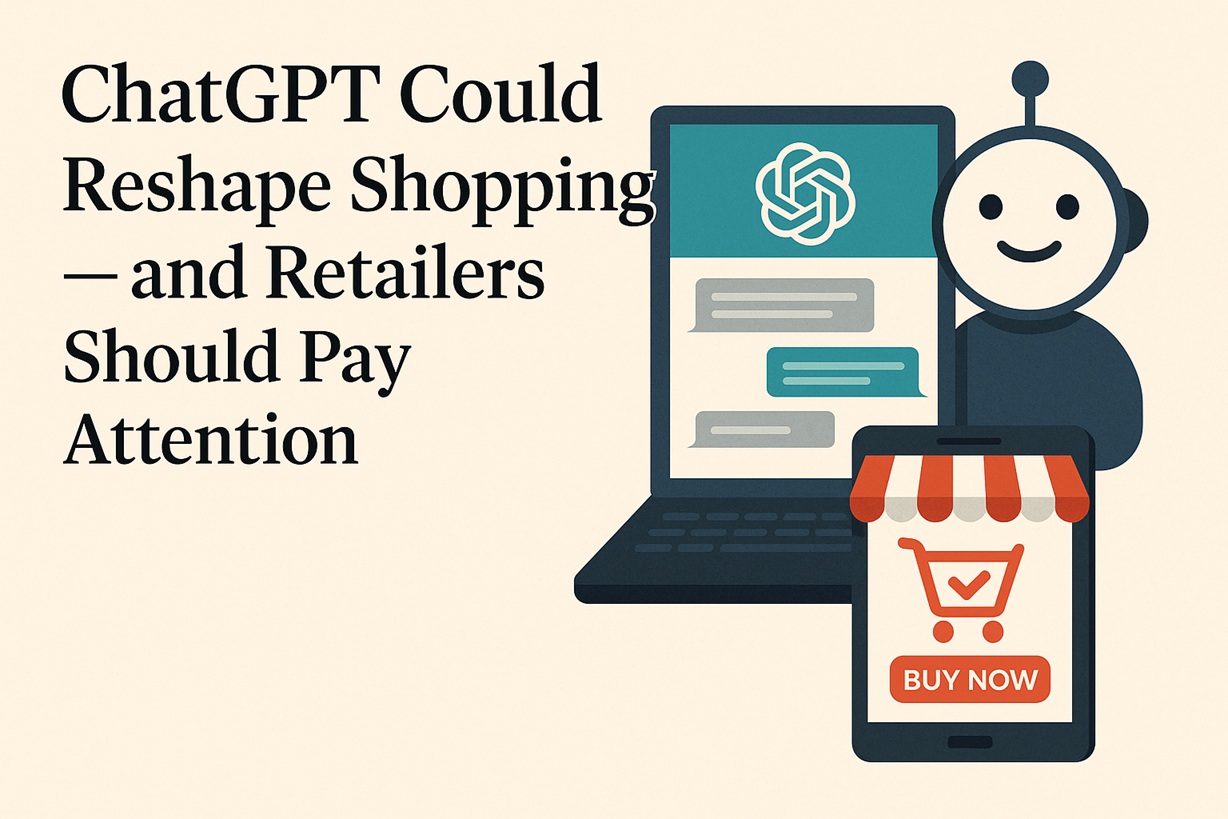


The rise of ChatGPT is changing the way people search, learn, and now – shop. For consumers, it could make online buying faster and easier than ever before. But for retailers, the technology poses a new challenge: how to stay visible and profitable in a world where shoppers no longer need to visit their websites at all.
A New Kind of Online Shopping
In October, Walmart, the largest retailer in the U.S., announced that shoppers would soon be able to browse and buy its products directly through OpenAI’s ChatGPT. That means a customer can ask a simple question, for example, “show me affordable strollers that are lightweight and good for travel,” and ChatGPT will display a shortlist of suitable options. The shopper can then complete the purchase right inside the chat, without ever visiting Walmart’s website.
Walmart’s stock jumped almost 5% after the news. Etsy and Shopify, which also plan to connect their stores to ChatGPT, saw similar boosts. Investors clearly believe this is the beginning of a new retail era.
The reason is simple: ChatGPT has become one of the most influential tools on the internet. It already handles millions of queries daily, and a small but fast-growing share of those are about shopping. According to Adobe, nearly four in ten U.S. consumers have used generative AI to look for products, compare prices, or find deals.
Retailers see opportunity in being present where their customers are. If people increasingly turn to chatbots to make shopping decisions, brands want to appear in those results. For platforms like Etsy, which has millions of unique, hard-to-find items, ChatGPT can help surface products that might otherwise go unnoticed. For Walmart, which competes mostly on price and speed, the chatbot offers another convenient entry point for customers.
In short, ChatGPT could act as a powerful new storefront, one that brings together discovery, comparison, and checkout in a single conversation.
The Hidden Risks
But this convenience comes with risks for retailers. Allowing customers to complete purchases through ChatGPT means giving up a crucial part of the shopping journey: direct contact with the buyer.
Retailers’ websites are not just online shops; they’re marketing and advertising engines. When a customer visits, the retailer collects data, promotes loyalty programs, recommends add-ons, and sells advertising space to suppliers. If more transactions start happening inside ChatGPT, much of that ecosystem could disappear.
Advertising is a particularly big issue. U.S. retailers are expected to earn almost $60 billion from digital ads this year, most of it from search placements on their own websites and apps. If product discovery moves to chatbots, that ad money could move with it.
There’s also the risk of losing brand identity. In a chatbot interface, all products are filtered through neutral AI logic. A customer may never even notice which retailer fulfilled their order. Over time, that can turn strong retail brands into mere suppliers in someone else’s system.
Big Tech’s Next Move
So far, OpenAI says that the product suggestions in ChatGPT are “organic and unsponsored.” But few expect that to last. The company has reportedly hired advertising specialists and is exploring ways to make the platform profitable. Given ChatGPT’s enormous traffic and valuable user data, paid placements or sponsored results seem inevitable.
Amazon, whose advertising business has become one of its biggest profit engines, appears wary. It has reportedly blocked outside AI systems from scraping its listings and is developing its own generative-AI shopping tools instead, including features that will let customers ask natural-language questions directly within Amazon.
What Happens Next
It’s too early to know how much shopping will actually move into chatbots. It’s possible that people will use them mainly for complex or expensive purchases such as a sofa, a washing machine, a laptop, where guidance and comparison are useful. Everyday items like groceries or toiletries may still be ordered directly from retailers’ apps.
Still, Walmart’s decision to embrace ChatGPT sets an important precedent. When the biggest retailer in the world changes direction, others usually follow. If consumers get used to buying through AI assistants, the shift could accelerate quickly.
At that point, retailers may need to renegotiate their role. They might demand a share of AI-platform revenue, much as news outlets have pushed for a slice of Google’s advertising income. Or they might invest more heavily in loyalty programs, exclusive products, and brand experiences that keep customers coming directly to them.
The Bottom Line
For shoppers, the idea of instant, chat-based buying sounds like the future of convenience. For retailers, it’s both a promise and a warning. ChatGPT and similar AI assistants could make it easier for people to find what they need, but they might also take control of how, where, and from whom people buy.
Retailers have long dreamed of “frictionless” shopping. Now that dream is arriving, but if they’re not careful, they may find the friction has simply moved to their side of the balance sheet.