DHL adds six healthcare air corridors: the handovers matter as much as the flight
DHL is extending its healthcare air network into Asia. For distributors, the useful questions concern temperature records, transfers and disruption plans.
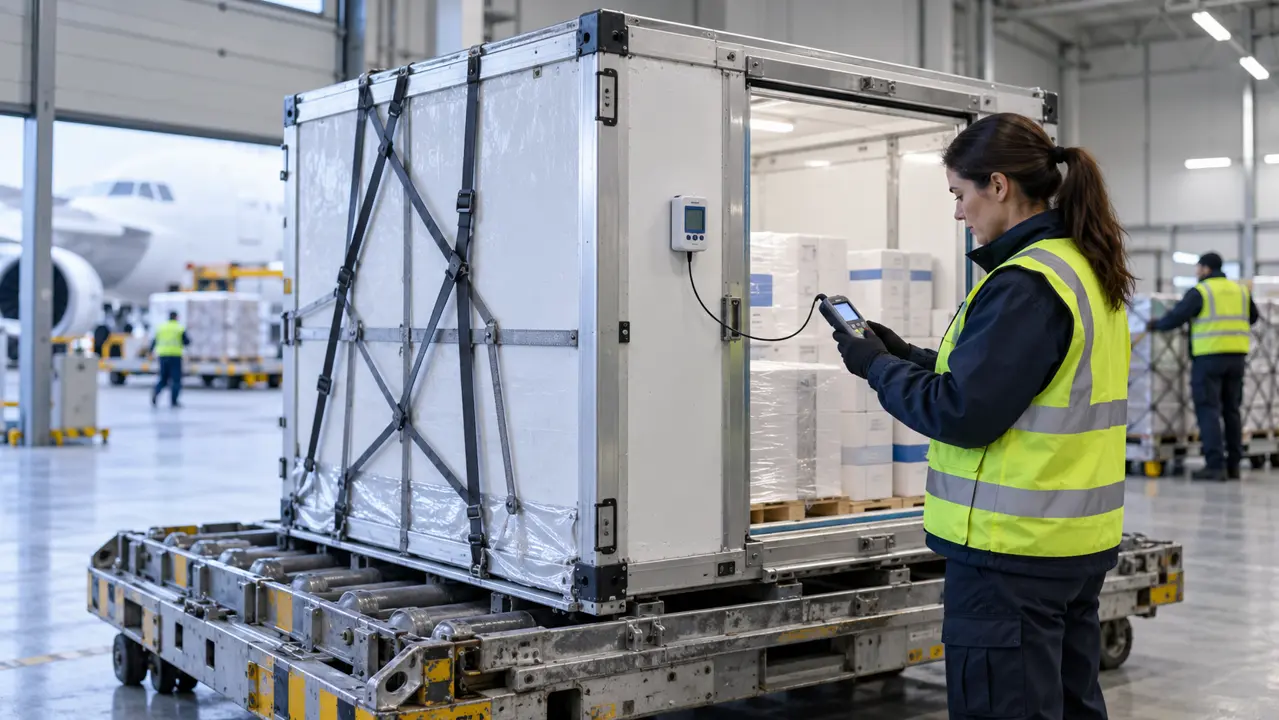
DHL Global Forwarding announced six new healthcare air corridors on 12 October 2026, linking European and North American gateways with pharmaceutical markets in Asia. The expansion gives temperature-sensitive cargo more routing options, but distributors still need to examine the whole journey before changing their shipping arrangements.
The new connections are Liège-Shanghai, Brussels-Shanghai, Brussels-Singapore, Cincinnati-Singapore, Cincinnati-Tokyo Narita and Cincinnati-Seoul Incheon. According to DHL's announcement, the network combines dedicated air capacity with specialist handling, temperature-controlled infrastructure and validated processes. Most flights use the company's own aircraft, reducing transfers between operators. DHL says Boeing 777 freighters provide three compartments with different temperature settings.
The company also describes thermal blankets and phase change materials as elements of its healthcare logistics approach. These are parts of a controlled transport system, rather than a promise that any package will remain suitable under any conditions.
A direct corridor still contains several separate operations
For a distributor, the commercial significance is the possibility of a more predictable route between established healthcare gateways. The operational challenge is establishing what happens before loading and after arrival. A well-controlled flight cannot undo an unsuitable collection vehicle or an extended wait outside the destination warehouse.
Our assessment is that buyers comparing these services should request a route-specific handling description. It should identify collection arrangements, export storage, airport transfers, destination handling and final delivery. Each stage needs an accountable party, including the points where responsibility passes to a subcontractor.
It also matters whether the quoted service includes the required packaging. A rate for moving a prepared shipment is different from a service that supplies, conditions and retrieves a specialist container. Comparing the two as if they were equivalent can produce a misleading price difference.
Ask for the exception procedure before the first shipment
Consider a hypothetical delivery booked to reach a distributor on Friday. If clearance is delayed until Monday, where will the goods wait, who checks the remaining protection time, and who can authorise a different arrangement? Those questions should have answers before the shipment leaves the manufacturer.
Distributors should agree how temperature records will be supplied, when an alert triggers contact, and which person can decide what happens next. Transport staff can protect and isolate a consignment; the appropriate authorised quality team should decide whether goods affected by an excursion can be released.
The distinction prevents a dangerous shortcut: treating a delivered shipment as saleable simply because it arrived. Receiving checks and product disposition remain separate steps. A tracking event proves movement, while the quality record supports a decision about the goods.
Compare reliability on the lane actually used
A network expansion is useful evidence of available infrastructure. It does not establish the performance of every origin, destination or collection timetable. A distributor should ask about operating days, booking deadlines, capacity access and the alternative route offered when a planned departure is unavailable.
A controlled trial can expose practical gaps. Record the collection time, transfer milestones, arrival condition, document availability and time until stock is released for customer orders. Include internal handling costs when comparing the trial with an existing service.
For businesses carrying expensive or time-sensitive healthcare inventory, avoiding an uncertain transfer may matter more than shaving a small amount off the freight rate. The new corridors expand the options. The buying decision still depends on whether the complete service can protect a specific product through a realistic delay, with evidence the receiving team can use.