KION reports faster robot deployment at GXO as warehouse AI moves into daily work
KION says simulation has cut deployment time at a French GXO facility. The announcement also describes a robotic case picker delivered to a ROSSMANN warehouse.
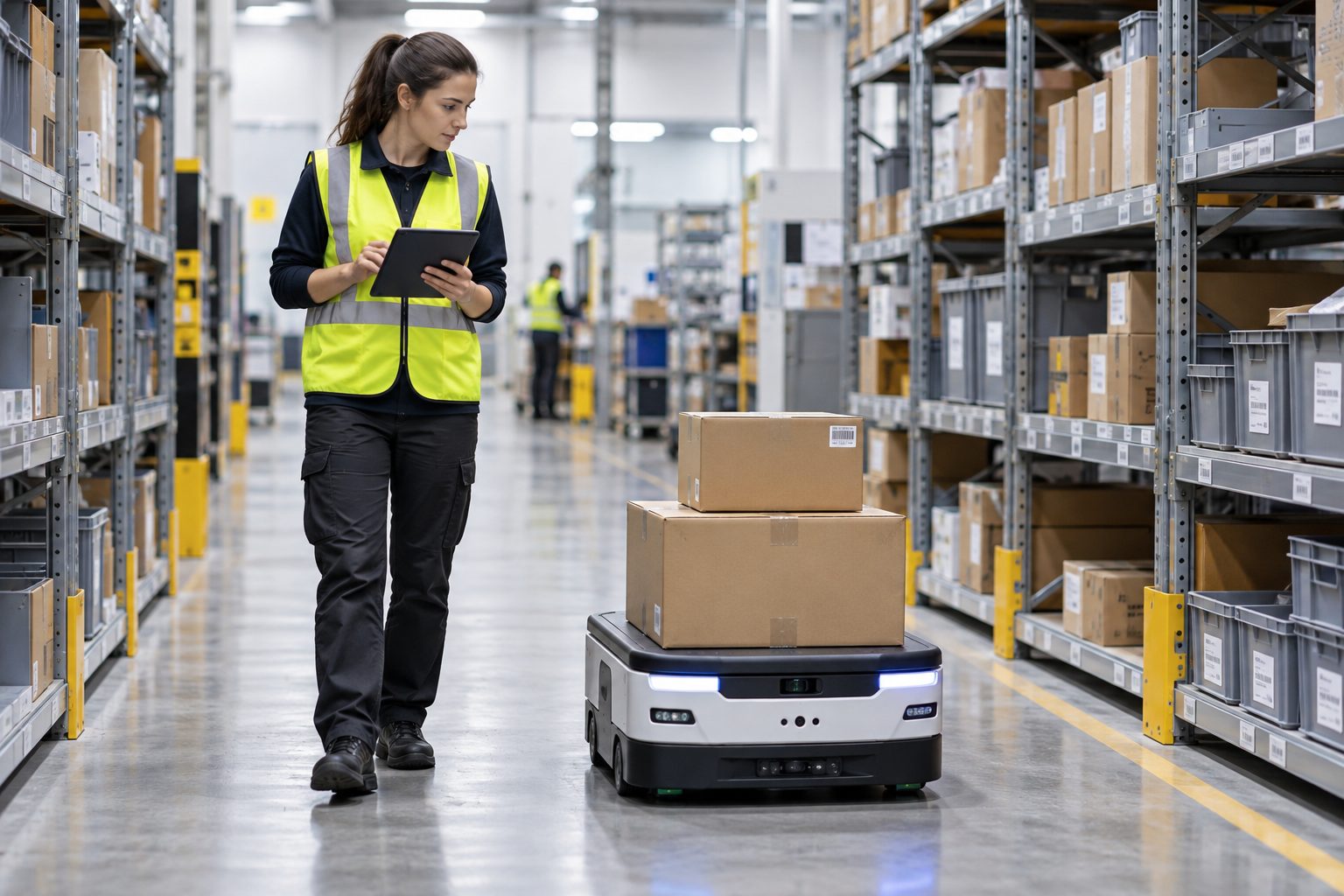
KION says autonomous vehicles are now working in daily operations at GXO's Épinoy facility in France, following a pilot earlier in 2026. Announced on 21 October at NVIDIA GTC Berlin, the project provides a concrete example of warehouse simulation being used to prepare automation for a live site.
In its company announcement, KION reports a reduction of more than 60% in the time required for on-site deployment. It describes using digital twins to train, test and optimise autonomous systems before physical installation, with support from NVIDIA and Accenture technologies.
The same release says a Robotic Case Picker was delivered to a ROSSMANN regional warehouse in October. KION describes camera-based identification and an arm that picks and stacks individual packages, adding that ROSSMANN ordered further vehicles after the pilot. These are supplier-reported outcomes; the release does not provide an independent assessment of either project's full operating economics.
Commissioning time is a specific cost
A warehouse automation project involves more than purchasing equipment. Mapping the environment, validating routes, connecting systems and checking performance all affect how quickly useful work begins. Moving part of that preparation into simulation can reduce the period during which a live site must accommodate testing.
For a distributor considering automation, that makes the deployment claim relevant. A shorter installation can reduce disruption and bring productive capacity into service earlier. However, the on-site period is only one part of the project. Software preparation, data collection and work performed off-site still need to be included in the commercial timetable.
A useful proposal would show the complete sequence from site survey to operational acceptance. It would identify which activities occur in simulation, which require physical validation and when the customer begins paying for the service or equipment. Reducing one stage does not automatically reduce the whole programme by the same percentage.
The site has to resemble the model closely enough
A digital twin is useful because it represents the physical operation. The quality of that representation matters when the warehouse contains mixed traffic, changing storage positions or different load types. A system tested on a clean, repeatable route has not necessarily been tested against every condition in a busy distribution centre.
The practical assessment should use the work the equipment will perform. For pallet transport, that includes the pickup and delivery points, load stability, route interactions and peak traffic. For case picking, carton surfaces, dimensions and stacking requirements become central to the acceptance criteria.
KION's references to damaged packaging and an existing warehouse environment are therefore commercially interesting. They concern the variation that makes real sites difficult to automate. Buyers should still request the tested limits, since a broad description of capability does not specify every package the equipment can handle.
Acceptance should measure the service the warehouse needs
A supplier and customer can agree throughput, successful task completion, intervention frequency and recovery time before commissioning. Those measures connect the equipment to the warehouse workload. Counting successful demonstration moves alone gives a narrower view.
For example, moving a pallet quickly has limited value if blocked pickup points generate frequent manual interventions. The project needs a defined handling process for those cases, with responsible staff and a safe recovery method established before routine operation.
The KION announcement suggests that simulation and autonomous equipment are progressing into sustained warehouse use. For wholesale operators, its strongest relevance is the prospect of a more predictable deployment. The purchasing decision still depends on complete project costs, realistic acceptance tests and the equipment's performance against the site's actual work.