Batch traceability for wholesalers: linking receipts, stock movements and dispatches
When a supplier queries one batch, can you find who received it? Keep the reference connected as cartons open, stock moves and orders leave.
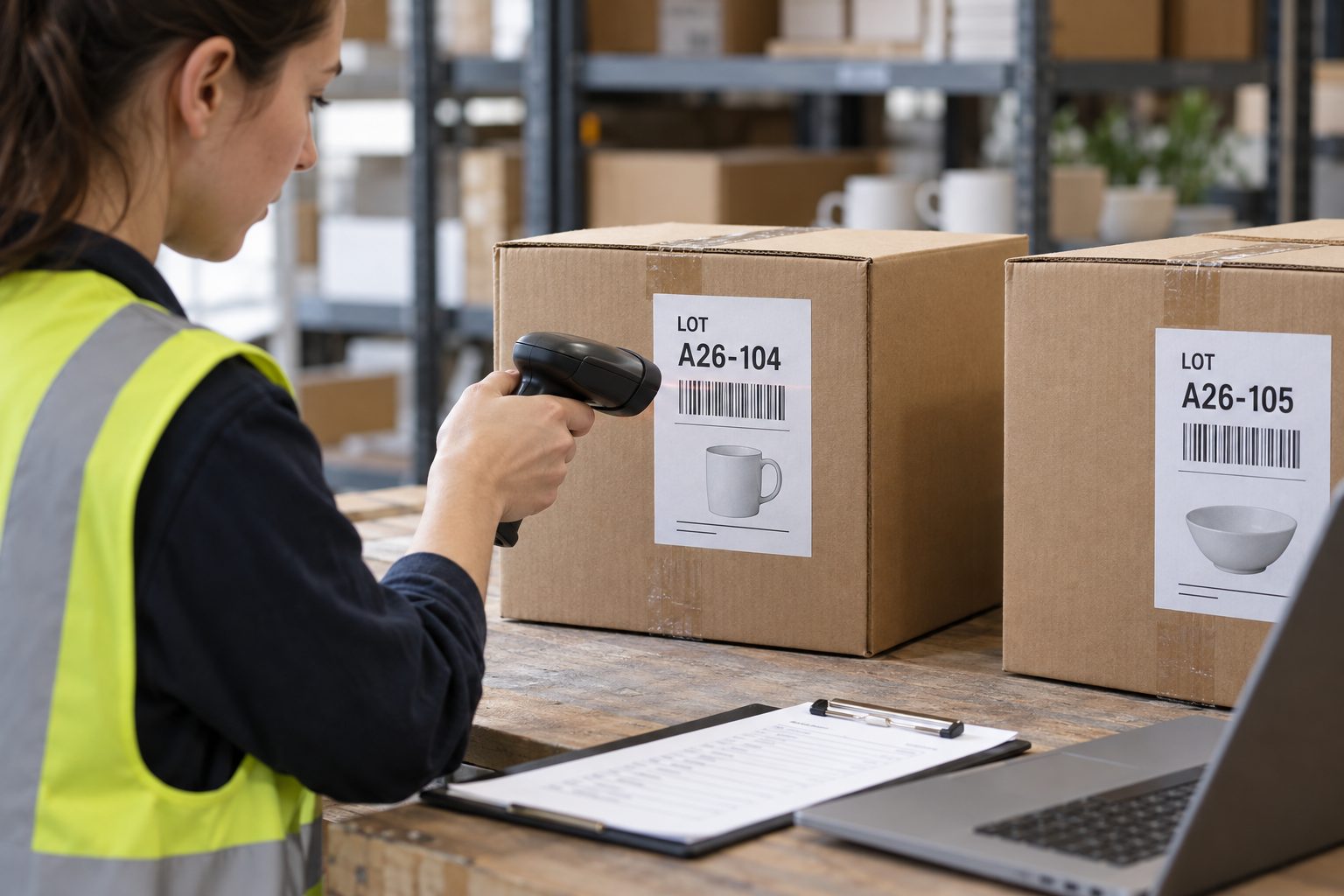
Image: AI-generated illustration of scanning labelled batches; batch references and barcodes are illustrative examples.
A supplier calls about a fault in one production batch. You know which product it is, but can you tell which customers received that batch? If the reference disappeared when the outer cartons were opened, the answer may take a long search. A SKU identifies the product. Keeping the batch reference connected to receipts, stock and dispatches lets you distinguish one group of that product from another.
Begin with the goods and the purpose of the record. Some products are tracked by batch, some by individual serial number and some through other identifiers. Ask the supplier how its references work and how they are shown on the goods and paperwork. Product-specific legal or technical requirements should be checked separately; this guide describes a general operational approach.
Keep the product identifier and batch identifier in separate fields. A single SKU can include stock from several batches. Conversely, the same short batch text may appear on products from different suppliers. Connect the reference with the relevant product and source so the business does not assume a label is globally unique.
Record the supplier, purchase order, receipt date, product, batch reference and quantity received. Check that the label matches the paperwork and clarify differences before stock is released. If a carton contains more than one batch, record the breakdown rather than assigning one reference to everything inside.
Imagine receiving 200 identical mugs: 120 from batch A and 80 from batch B. The product total is 200, but that total cannot answer a later question about batch A. The two batch quantities need to remain visible through storage and dispatch. This is the detail that lets an investigation focus on a particular group rather than every mug sold under the same SKU.
Do not lose the label when you open the box
Follow a carton being opened. If its batch label goes into the waste with the packaging, how will the loose units stay identifiable? Decide that before the first order is picked. Labels and stock records have to survive the way staff actually handle the goods, including smaller packs and moves between locations.
Record transfers using the product, batch, quantity and destination location. Do not change the batch reference simply because the warehouse changes its internal location code. These fields describe different things. Keep adjustments and corrections traceable so someone can distinguish a physical move from a record that was amended after an error.
Capture which batch quantities were sent against each order and shipment. Where an order contains stock from two batches, record both. That gives the business a way to identify the recipients of a particular group of goods without assuming every customer who bought the SKU received the same stock.
Try the scan at the picking bench and look at what the system records. A barcode may identify the product without identifying its batch. If staff believe scanning captures both when it captures only one, the process looks complete while its crucial link is missing. Make any extra confirmation clear and test it with a mixed-batch order.
When goods return, check the visible identifiers and link them with the original dispatch where possible. Keep uncertainty explicit if the label is missing or the goods cannot be matched confidently. Do not invent a batch reference merely to complete a required field.
If goods are repacked or reworked, preserve the relationship between the incoming identifiers and the resulting stock records. Record the quantities and the action taken. A new internal reference should not erase the source history that may be needed to investigate a later problem.
Choose one batch and trace its receipt, current locations, dispatched quantities and any returns or adjustments. Check whether the quantities reconcile and whether customer references can be found promptly. Then choose a customer shipment and work backwards to the relevant supplier receipt. Both directions reveal different gaps.
Run the search before the supplier makes that call. Pick a batch and find its receipt, remaining stock, dispatches and returns; then pick a customer shipment and work backwards. Missing links are easier to fix when nobody is waiting for an urgent answer. Useful traceability is a record chain people can follow, not just a label they remember seeing.