How to check a wholesale supplier before placing your first order
A practical sequence for checking a new wholesale supplier, testing an order and spotting inconsistencies before committing money.
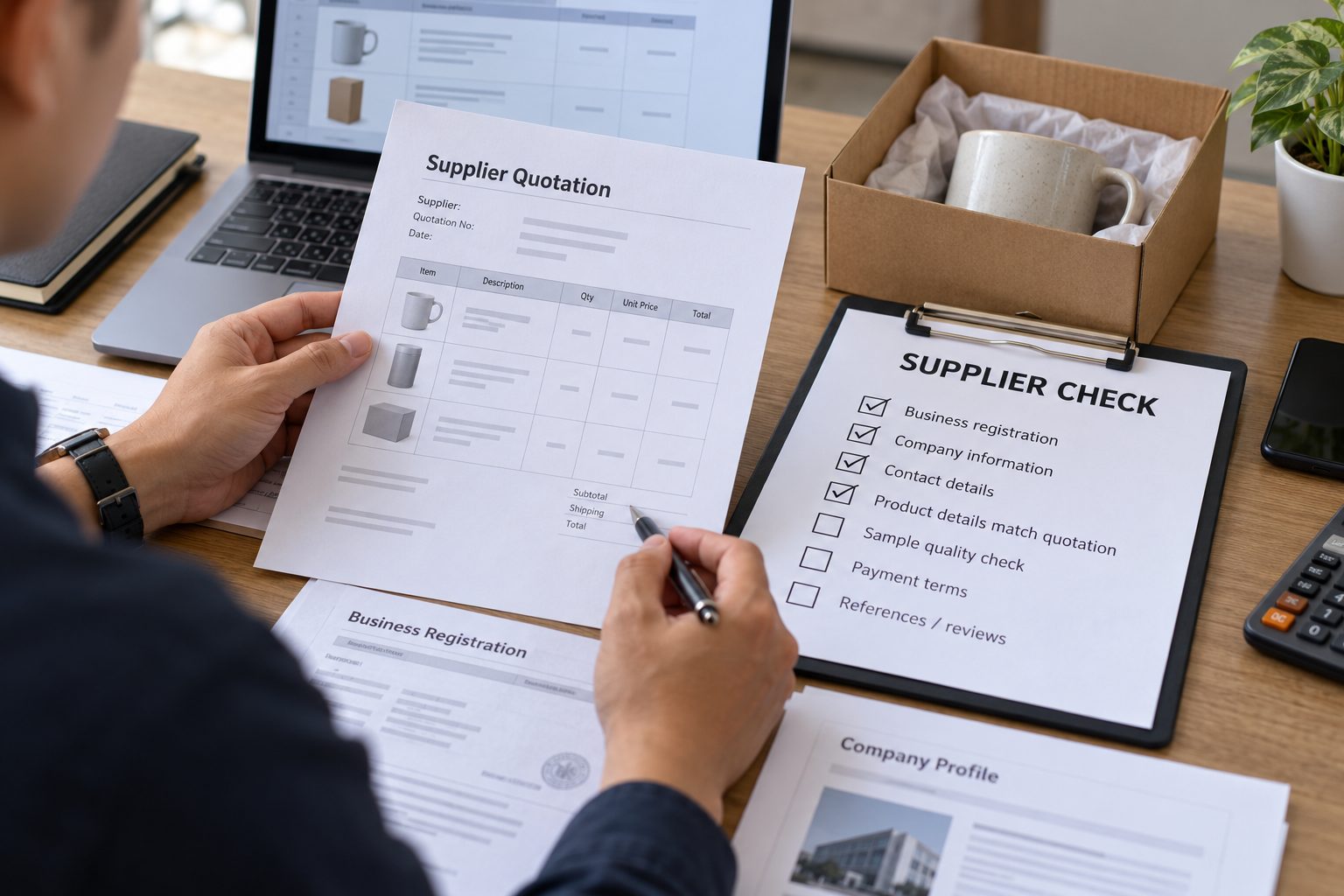
Image: AI-generated illustration of supplier verification; documents and figures are illustrative examples.
A convincing website and a cheap price are easy to produce. A dependable supply relationship takes more evidence. Before sending a first payment, establish who you are buying from, whether the goods match your requirements, and what happens if the delivery is wrong. These checks do not eliminate risk, but they help you distinguish a supplier worth testing from one whose story does not hold together.
Start with the business identity
Record the supplier’s legal business name, trading name, address, website and contact details. Compare those details across its quotation, invoice, website and the relevant public business register where one is available. A trading name can legitimately differ from a registered name; the supplier should be able to explain the relationship. An unexplained mismatch is a reason to pause rather than invent an explanation on its behalf.
Call using a number you found independently, especially before a substantial first order. Ask which warehouse will dispatch the goods and whether the company owns the stock or sources it after receiving payment. A broker can be a useful supplier, but the arrangement affects availability, delivery times and your ability to resolve problems.
Check the offer at product level
Request an itemised quotation showing product identifiers, condition, quantities, pack sizes, price, currency and delivery terms. For branded goods, ask about the source of the stock and documentation supporting its provenance. A photograph alone proves little: it may show a different batch, an old shipment or goods that belong to somebody else.
If the products have variants, make those explicit. A model name may cover different storage capacities, colours, plug types, regional specifications or accessories. Confirm whether items are new, refurbished, open box or customer returns. The words “Grade A” are only useful when accompanied by the supplier’s written grading criteria.
Test the operating process
Where practical, place a small trial order that is large enough to reveal the supplier’s normal process. Check how quickly it acknowledges the purchase order, whether tracking arrives when promised, and whether the received quantities match the invoice. Photograph the packaging and inspect a representative selection of items. Record the time spent correcting errors as well as the purchase price.
Discuss shortages, faulty goods, returns and credits before payment. Ask who pays the return freight, how claims are submitted, and how long a replacement or credit normally takes. A supplier that answers these questions clearly gives you more usable information than one that simply promises excellent customer service.
Treat changed payment details as a separate check
Compare the beneficiary details with the contracting business and resolve unexpected differences through an independently verified contact. If bank details change, confirm the change outside the email thread that announced it. Do not let a claimed dispatch deadline prevent that check. A genuine supplier should understand why a buyer verifies a new payment instruction.
Keep the quotation, correspondence, purchase order, invoice and inspection record together. After the trial, assess accuracy, communication, delivery and claim handling alongside margin. Increase order sizes gradually as evidence accumulates. The purpose of checking a supplier is to build a relationship on facts, with a clear route for handling the ordinary problems that occur in trade.