Shelf-ready packaging should earn its place in the retailer's aisle
A tear-off carton is only useful if it works from delivery through replenishment to the last item sold. Specify and test shelf-ready packaging with the receiving retailer.
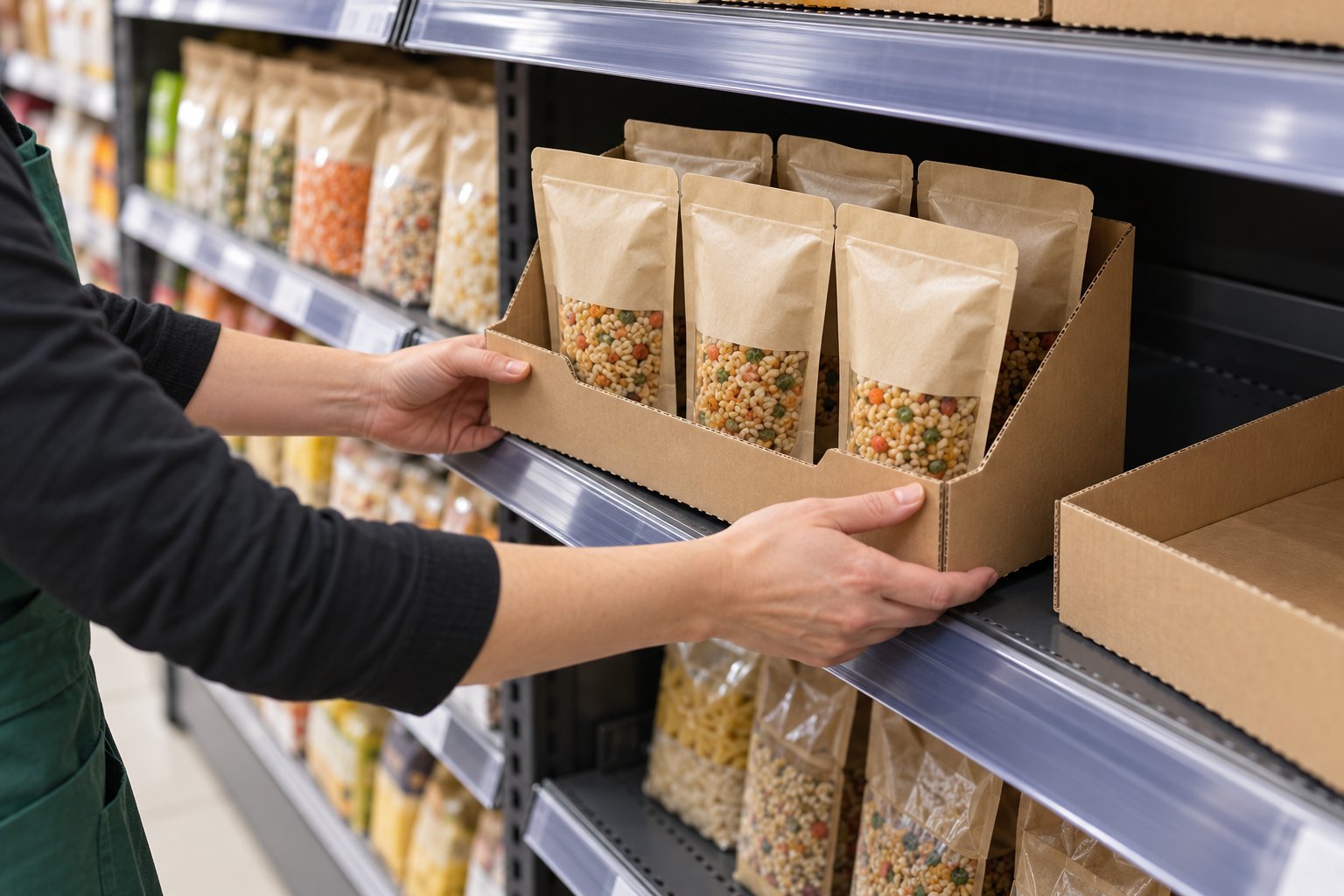
A display tray can look excellent on a supplier's presentation slide and still be awkward in a shop. It may be too deep for the shelf, difficult to open without tearing, or unstable when only two products remain. For a wholesaler supplying retail chains, the packaging is part of the delivery specification.
Shelf-ready packaging usually allows a group of products to move from the transport pack onto the selling shelf with less individual handling. Its usefulness depends on the retailer's actual replenishment process, shelf space and product presentation requirements.
The Australian Food and Grocery Council's Trading Partner Forum guidelines use five practical functions: identification, opening, shelving, shopping and disposal. The guidance also stresses discussion between trading partners and consideration of the particular product and category. It is a useful framework, not a substitute for the receiving retailer's specification.
Begin with the shelf and the replenishment task
Ask the customer for the available shelf width, depth and height, the intended number of facings and the normal replenishment method. Confirm whether the tray must be placed directly on the shelf or whether staff will still handle individual units.
Case quantity belongs in the same conversation. A tray that holds too much stock can occupy valuable space or leave a slow-selling line exposed for too long. One that holds too little may increase replenishment work. The choice should reflect the selling rate and agreed presentation.
Purchasing translates the approved requirement into the supplier's packaging specification. The product or packaging owner controls the approved version. Warehouse staff should not have to improvise by cutting down oversized trays when the goods arrive.
Follow a sample through its real journey
Use a representative packed sample and test it from receipt to disposal. At goods-in, can staff identify the product and distinguish it from similar variants? Are the relevant codes accessible in the way the pack will actually be handled?
At opening, observe the process without explaining every step. If someone needs a demonstration to locate the tear strip, the design may be unclear. Check whether removing the lid damages the tray or the products. Record the result rather than relying on a supplier's assertion that opening is easy.
Place the tray on the intended shelf. Check fit, stability and visibility of the product. Then remove units progressively. A full display can hide problems that appear once the supporting products have been sold.
Finally, look at the empty pack. Does it collapse in the expected way? Can the shop separate its components under its established waste arrangements? The retailer's process, and the materials actually used, determine the answer.
Put a value on the handling difference
Suppose an illustrative store takes 70 seconds to unpack and arrange a conventional case, compared with 25 seconds to open and place a shelf-ready tray. The measured difference is 45 seconds per case. Across 80 cases, that is one hour of task time.
That calculation is a trial result, not an automatic payroll saving. The commercial benefit depends on whether the retailer can use the released time productively and whether the tray creates extra work elsewhere. Include damage, unusable packs and disposal time in the comparison.
The supplier's added packaging cost also matters. A more expensive tray may still be worthwhile if the customer values the improvement, but the parties should agree who bears that cost and how it affects the offer.
Approve the version, then control changes
Keep the agreed sample, dimensions, materials, case quantity and opening method with the product record. Record retailer approval where required. Link the specification to the purchase order so that a later production run can be checked against the same requirements.
A supplier proposing a different board grade, tray height or perforation needs to follow the agreed change process. A small-looking alteration may affect stacking strength or shelf fit. Decide the need for another trial according to the change, rather than assuming every packaging revision is cosmetic.
Shelf-ready packaging earns its place when it helps the shop handle and sell the product reliably. The best specification begins with that everyday work and finishes with a pack that has been tested in it.
Reference: Trading Partner Forum, Shelf Ready Packaging Industry Guidelines, document dated 2017. The trial and timing example are illustrative.