DHL expands battery logistics network as supply chains become more specialised
DHL is expanding specialist battery logistics. For distributors, the return journey and confirmed handling capability deserve as much attention as outbound freight.
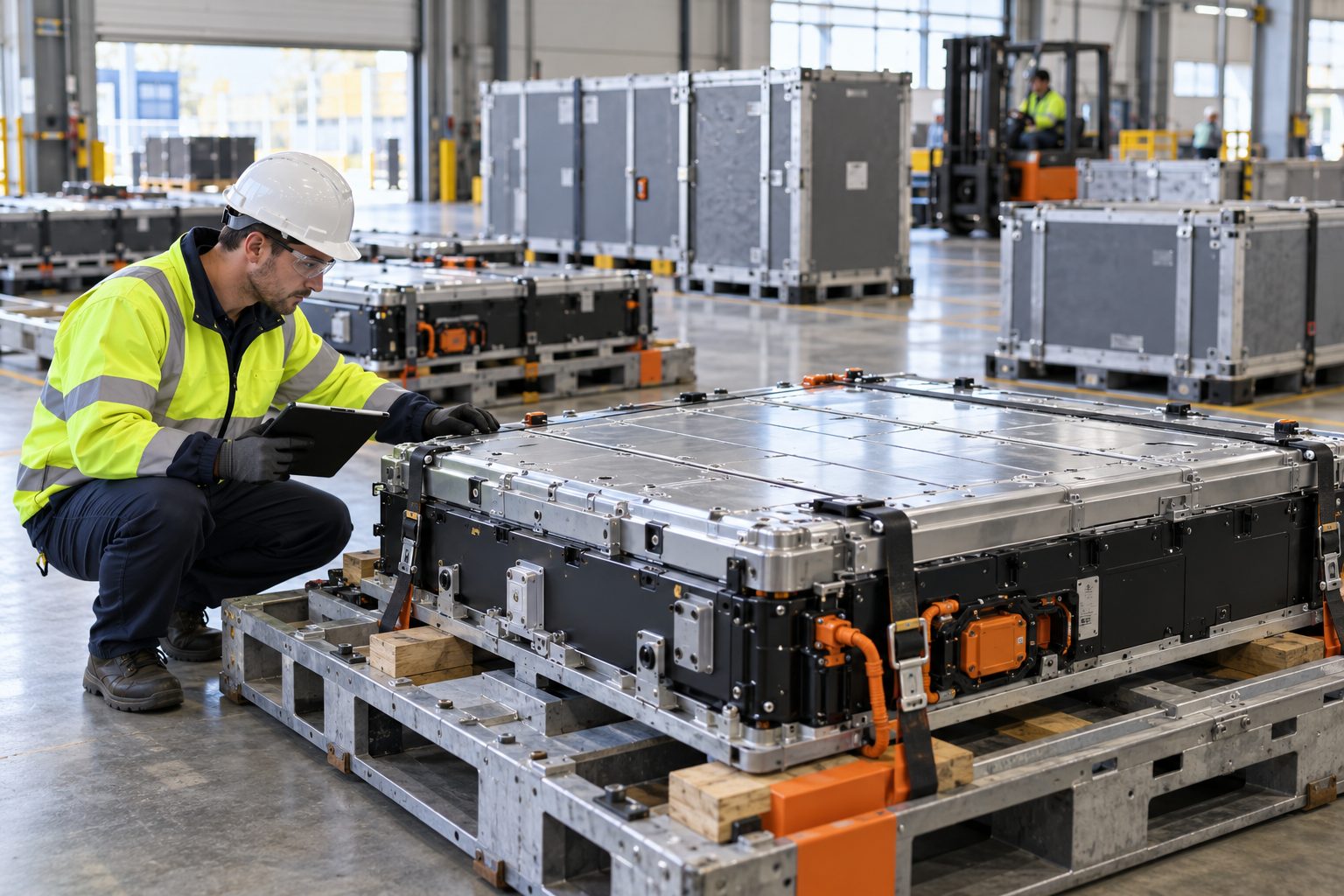
Image: AI-generated illustration of specialist battery handling; not a photograph of a DHL facility.
A battery supply chain does not finish when new stock reaches a warehouse. It also has to deal with equipment going into service and items coming back in a different condition. That wider job is behind DHL’s announcement of 22 September 2026: an expansion of battery logistics across manufacturing support, transport, warehousing and aftermarket services. DHL says its connected network already covers more than 20 sites, with further growth planned.
What is being added
The network combines capabilities from DHL Supply Chain, DHL Global Forwarding and DHL Express. DHL said it had recently made 13,000 square metres of battery-ready warehouse space available in Halle, Germany, and was preparing an additional specialised facility in Hungary expected to operate in 2027.
DHL also reported delivering more than 1,100 battery energy storage system units worldwide during the first half of 2026. The figures describe the company’s own network and activity. They do not establish that every site can accept every battery product, or that a service is available on every route. For a distributor arranging a particular movement, those details still need a specific answer.
The important distinction is what is being moved and in what condition. Components, finished products, industrial equipment and returned items are not interchangeable consignments. A provider needs a precise description to assess the work. “We ship batteries” is a starting conversation, not an acceptance decision for the goods in front of you.
The starting point is reliable product information. A logistics provider cannot assess a poorly described consignment accurately. Manufacturers and traders should keep the relevant product documentation, quantities, packaging information and condition records available. Specific transport and storage requirements depend on the goods and route and should be confirmed with qualified providers under current rules.
The return journey deserves its own plan
Returns are where an apparently complete arrangement can develop a gap. Who receives an item when its condition is uncertain? Who assesses it and decides where it goes next? Which provider has accepted that movement? Ask those questions before opening a new sales market. The outbound service cannot be assumed to cover the return journey on the same basis.
Do not assume a general warehouse can support a specialised product because it has spare space. Ask about the agreed scope, training, equipment, product acceptance process and escalation route. Get a clear description of which tasks are included and which require separate arrangements. Those questions apply to many complex goods categories, beyond the battery sector.
Where several providers handle different stages, assign responsibility for each handover. The origin team, transport operator and destination warehouse need consistent shipment references and product information. If an exception occurs, your business should know who can make a decision and who needs to approve a change.
An integrated service may simplify coordination, but it still needs a transparent quotation and measurable commitments. Check how receiving, storage, technical work, transport and exceptions are charged. Use representative shipments to test whether the proposed model fits your volumes rather than extrapolating from a provider’s largest project.
As more capacity comes into the network, buyers will need to check what is available on their own lanes and when. The planned Hungarian facility, for example, is expected in 2027; it should not be treated as capacity already open for a booking today. Keep announced expansion separate from the services a provider has confirmed it can deliver now.
The expansion gives manufacturers and distributors more reason to examine the available specialist capacity. It also gives them a useful test for their existing arrangements: can everyone explain the handling, handovers and return route for the actual goods? A large network is encouraging. A confirmed service that fits the product and lane is what makes the next booking workable.