Nike wholesale sales hold up better than direct sales in its latest quarter
Nike’s wholesale sales held up better than its direct channel. Footwear buyers still need to distinguish deliveries into shops from pairs customers buy.
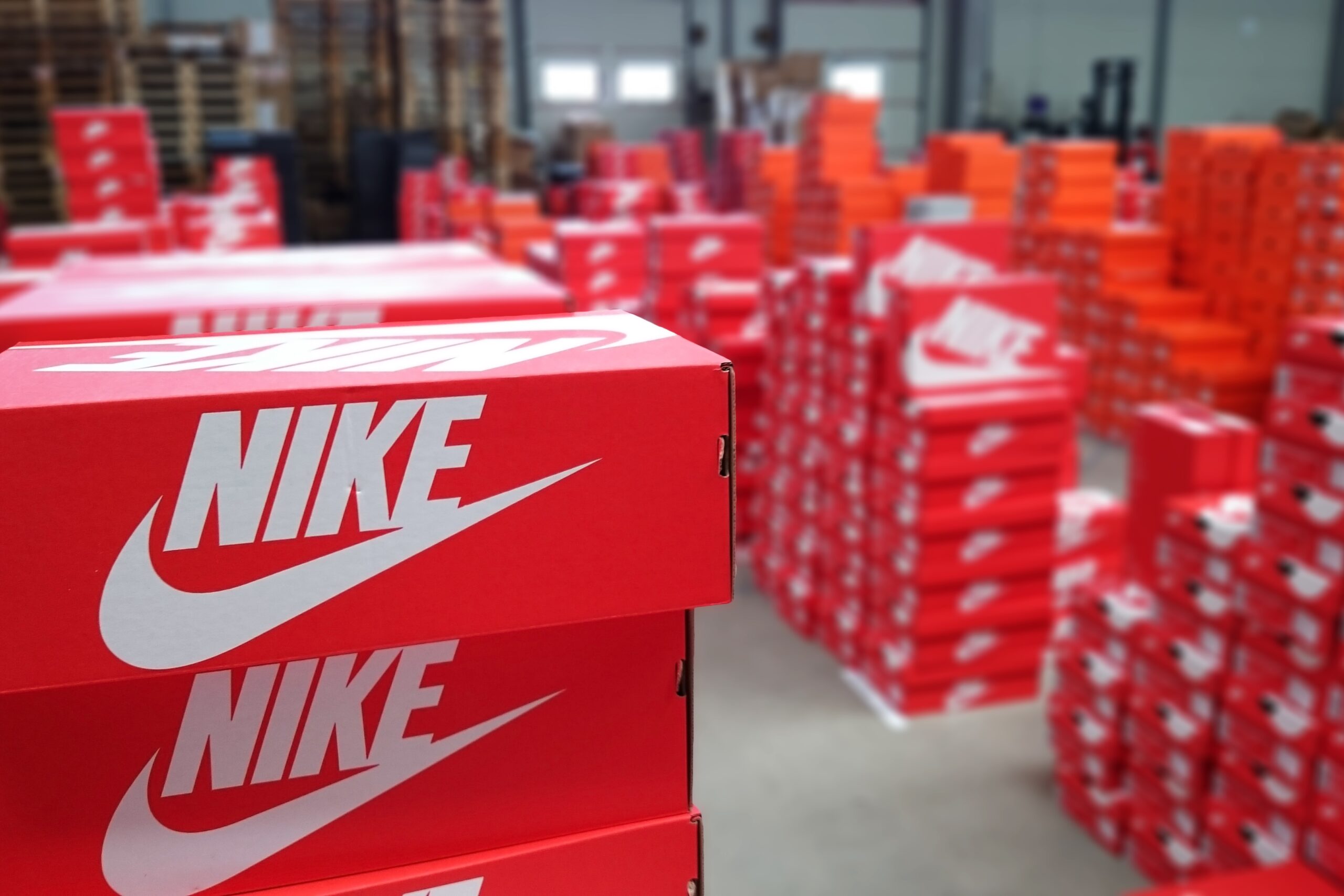
Nike shoe cartons. File image.
Nike’s wholesale business held up better than its direct channel in the latest quarter, even as the group’s sales fell. The company’s 1 October 2026 results, covering the quarter ended 31 August, show revenue of $11.2 billion, down 4% on a reported basis. Nike Brand wholesale sales fell 1% to $6.8 billion; Nike Direct fell 8% to $4.1 billion. For footwear buyers, the contrast is more revealing than the total.
Nike said wholesale weakness in Greater China was partly offset by growth in North America. Nike Direct’s decline included lower digital and company-owned store sales. The group also reported inventory of $7.8 billion, down 3%, and a gross margin of 42.8%. These are company-reported financial measures; they do not describe the stock position or profitability of any individual independent retailer.
Nike also introduced Pace, a programme involving its operating model and supply chain. Independent buyers will want to see what those changes mean for allocation and delivery, rather than assume a programme name translates into better availability. The release supplies the brand-level picture. Each retailer still has to work out what is happening to the pairs already on its shelves.
Sell-in is only half the story
A relatively stronger wholesale result can be encouraging for independent retail, but it does not prove that every shop is selling stock quickly. A brand’s wholesale revenue records its sales into that channel. Retailers still need to understand what happens after goods arrive: which sizes sell, how long products remain on shelves and whether the realised selling price supports the original buying decision.
Suppose a shop receives more running shoes while its casual footwear slows. Total deliveries could look healthy even as one part of the assortment ties up cash. Separating the ranges would reveal the problem; looking only at the total would hide it. This is the gap between selling into a channel and goods finding their eventual customers.
In footwear, even a model-level total can conceal the important detail. A shelf full of pairs is little comfort if customers cannot find their size. Before promoting a slow range, check the size and colour mix. Is demand weak, or are the remaining pairs simply the ones fewer customers need? The answer changes whether the next move should be replenishment, a price adjustment or a smaller order.
Discuss delivery timing with suppliers against the store’s actual sales calendar. A shipment arriving after a local sporting event or promotional period may have a different commercial value from the same stock arriving earlier. Keep confirmed dates separate from expected dates, and make any order changes explicit in writing.
A lower inventory figure is not a clearance offer
A decline in a manufacturer’s inventory does not automatically mean a wave of discounted goods is available to wholesalers. Nor does it guarantee that desirable products will be easy to reorder. Buyers should ask about the specific offer, condition, quantities and channel permissions rather than infer an opportunity from a balance-sheet number.
When evaluating a discounted lot, compare the size distribution with customer demand. A low unit price can conceal an assortment dominated by slower sizes or older specifications. Include freight, preparation and the time needed to sell the remainder when judging the offer. The objective is a workable stock position, not simply a large headline discount.
The practical lesson from Nike’s channel split is to measure your own channel and assortment separately. Review sell-through, full-price sales, replenishment gaps and ageing units for each meaningful range. Then discuss future orders using that evidence. Brand-level sales trends provide context, while the stock decision still depends on what customers buy from your business.
For wholesalers, repeat orders may be more informative than a large first delivery. Ask retailers where sizes are missing and where stock is lingering, then compare their answers with what they reorder. Nike’s channel split is worth watching, but it cannot tell you whether a particular assortment is a good buy. The next commitment needs evidence from the products and customers you actually serve.
Source: Nike fiscal 2027 first-quarter results, 1 October 2026.