Unilever's home-care growth outpaces food as buyers face a mixed demand picture
Unilever's October trading update shows very different growth rates across its categories, with implications for replenishment and price discussions.
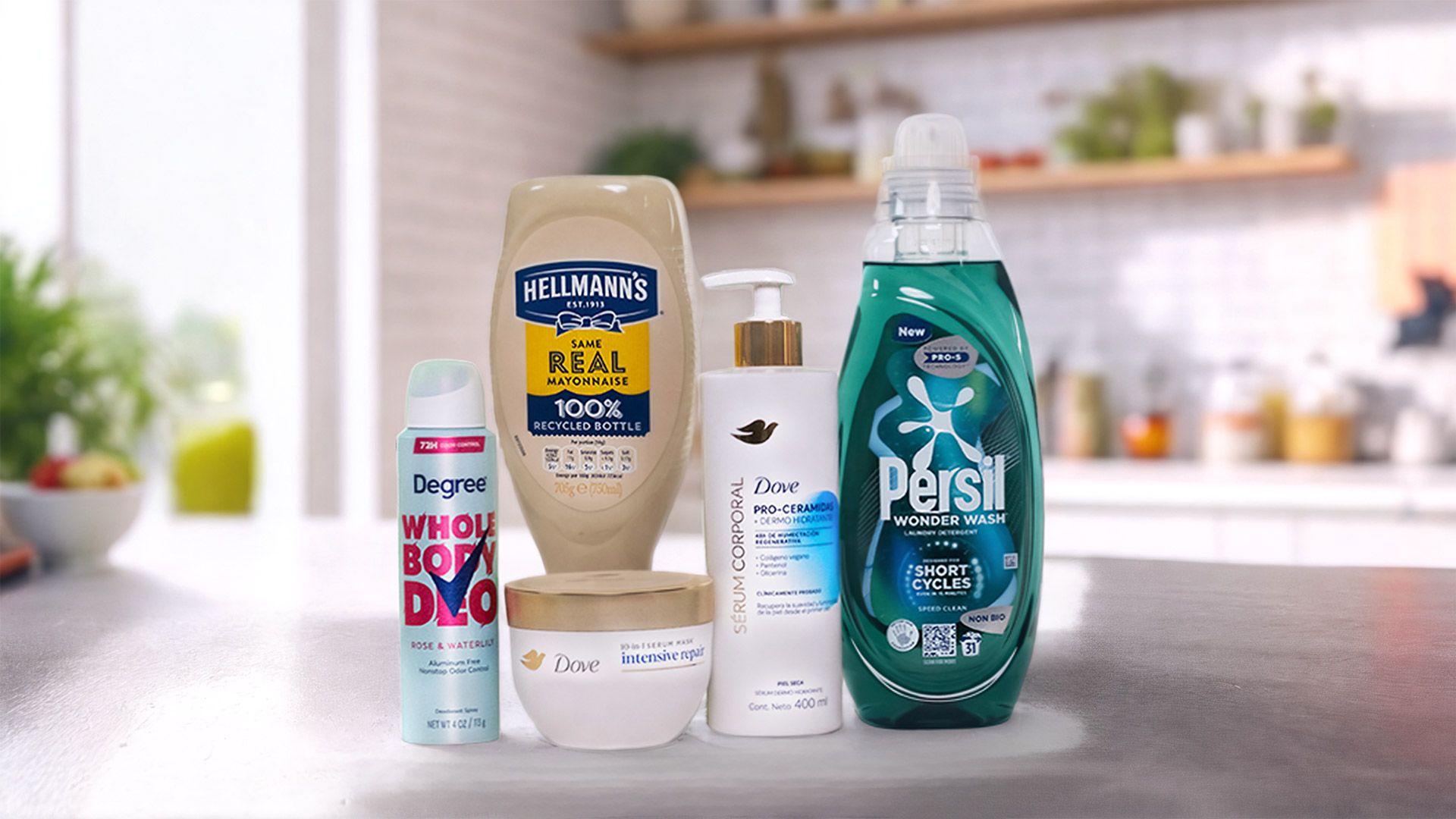
Image source: Unilever.com
Cleaning products and food are telling different stories inside Unilever's latest trading update. For wholesalers buying across several everyday categories, that makes the detail more useful than the group growth figure.
Unilever's third-quarter statement, released on 28 October, reported underlying sales growth of 5.2%, comprising 2.9% volume growth and 2.3% price growth. Home Care grew 9.1%, Personal Care 6.3% and Beauty & Wellbeing 5.7%, while Foods was almost flat at 0.1%. The company linked the step-up in pricing to higher commodity costs, particularly in home and personal care, and raised its full-year volume-growth expectation to at least 3%.
The immediate buying implication is not that every cleaning line needs a larger order. It is that a single replenishment assumption across household products, toiletries and food can obscure very different trading conditions.
Separate price movement from customer demand
A higher sales value can result from selling more units, selling more expensive products, charging higher prices or some combination of the three. A distributor deciding how much warehouse space to allocate needs to know which is happening in its own business.
Consider a hypothetical line whose sales increase from 10,000 to 10,500 in the invoicing currency. If the average selling price also rises 5%, the higher revenue does not demonstrate that more physical units are leaving the warehouse. Ordering another 5% of stock on that evidence alone would confuse revenue growth with replenishment demand.
Review case sales, active customer numbers and reorder intervals alongside revenue. If existing shops are reordering faster, that is different from a one-off opening order by a new customer. Both may be valuable, but only one automatically suggests a recurring change in the buying rhythm.
Price notices still need line-level checking
A manufacturer's category commentary is background for a negotiation, not the price list itself. Buyers need the actual affected items, effective dates, pack sizes and net prices offered by their supplier. A category-wide average cannot tell you whether a particular case will cost more next week.
Where a price change is proposed, confirm how it affects purchase orders already accepted, scheduled deliveries and outstanding quotations. Sales colleagues also need to know when their existing customer offers expire. Otherwise a business can update its buying costs while continuing to sell against old assumptions.
The sensible administrative sequence is to agree the change, update the relevant purchasing records, test a sample transaction and then issue any necessary customer communication. The warehouse should not be expected to discover a commercial price disagreement when the next delivery arrives.
Make space for the products your customers actually repeat
Different category growth rates also provide a useful reason to revisit the range. A fast-moving household staple may deserve deeper stock than a slower, higher-priced variant, even when both sit under the same well-known brand. Conversely, a product with modest unit sales may still be worth keeping if it reliably completes a profitable mixed order.
Start with a small number of consequential decisions: lines regularly unavailable, products tying up disproportionate cash, and items whose purchase prices have changed materially. Compare those with customer requests and recent sell-through. Avoid rebuilding an entire range around one quarterly announcement.
Unilever's figures describe its business across markets and channels. They cannot substitute for the order history of an independent distributor in one country. Their value is in prompting sharper questions: which categories are growing in physical volume, where are prices moving, and which individual products are earning their place in the next purchase order?
Related guidance: a forecast built from your own demand.
AI-generated editorial illustration, not the named company's facilities or products.