Free delivery is not free: setting a wholesale order threshold that earns its keep
A £300 order may be cheaper to serve than a £500 one. Product margin, picking work and the delivery route matter more than basket value alone.
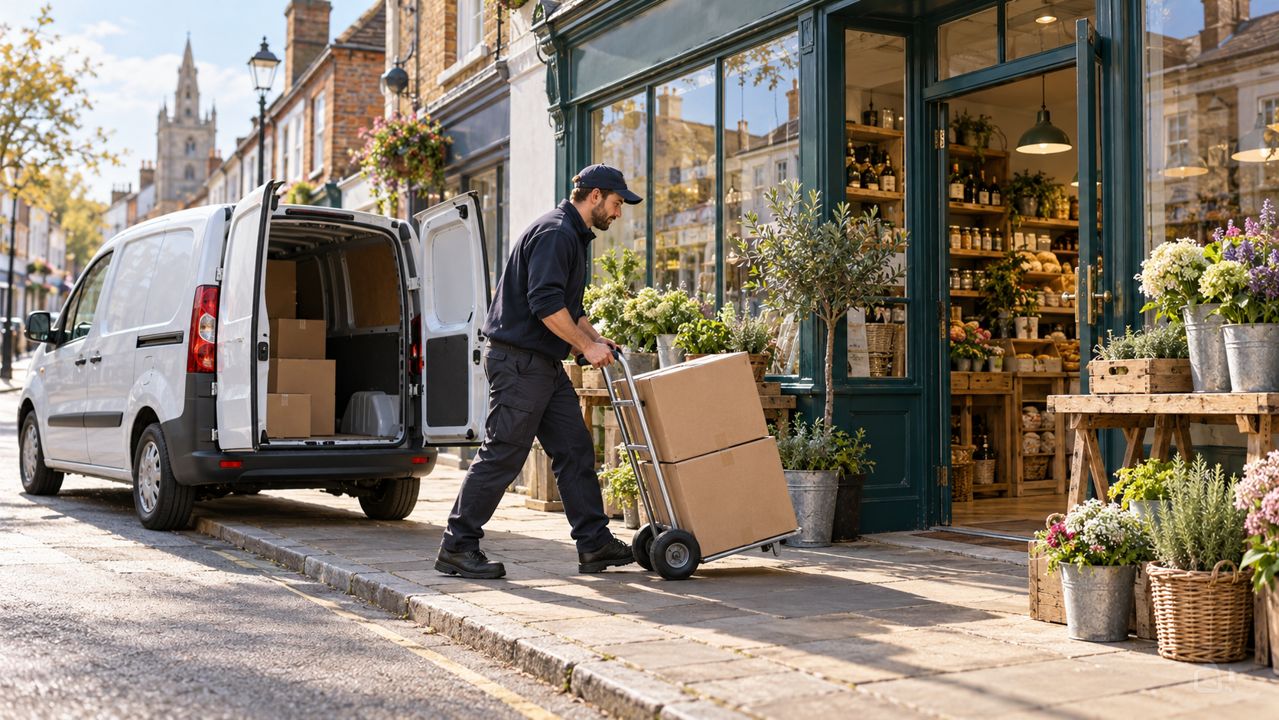
AI-generated illustration.
A wholesale customer adds one more case to qualify for free delivery. The order value rises, the customer is pleased and the promotion appears to work. Whether the distributor benefits depends on what was added and what it costs to deliver.
A threshold copied from a competitor can be a poor fit for your product mix. The competitor may have denser routes, higher margins, different carrier terms or a willingness to subsidise particular accounts. Your threshold needs to start with your own orders.
Work backwards from the contribution you need
Consider a fictional order producing a 20% gross margin before picking and delivery. If picking, packaging and delivery together cost £24, a £120 order merely covers those costs. It leaves nothing from that gross profit towards overhead or the return the business needs.
If the required contribution after those costs is £16, the order needs £40 of gross profit. At a 20% gross margin, that means £200 of sales. At a 10% margin, it means £400. Both calculations assume the £24 service cost stays unchanged, which must be checked rather than taken for granted.
Use sales and costs on the same basis, normally excluding recoverable taxes when comparing commercial margins. The numbers here are illustrative. They show why a single basket-value rule can work well for one range and badly for another.
The final case can push the cost up
Adding a heavy carton may move a parcel into a different charge band. An awkward item may need a second package. A pallet order may require a service the smaller order did not. In these cases, extra sales do not simply add margin to a fixed delivery bill.
Look at actual orders immediately above and below the proposed threshold. Recalculate their fulfilment costs and inspect what customers tend to add. If the qualifying item is usually a bulky, low-margin commodity, the offer may encourage precisely the mix that is hardest to serve profitably.
Do not hide an exception in a sentence nobody sees until checkout. Explain any exclusions for oversize goods, remote destinations or special services where customers choose delivery. Consistent wording saves the sales team from making individual promises it cannot economically support.
A regular route offers a different bargain
For your own delivery fleet, distinguish the cost of adding a nearby stop to an existing route from the cost of making a special journey. The first may be sensible at a lower order value; the second may be uneconomic even on a substantial basket.
One workable offer is a lower free-delivery threshold on a scheduled area delivery day, with a separate charge for urgent or off-route service. The customer gets a meaningful choice, while the business gains a chance to consolidate work.
Include time at the stop. Waiting for access, checking goods with the customer and carrying cartons upstairs can consume more time than the drive between neighbouring shops. Route distance alone is an incomplete measure of the service.
Watch customer behaviour after the change
A higher threshold may consolidate several small orders into one useful delivery. It can also push customers to overbuy, delay replenishment or move some purchases elsewhere. Track order frequency, contribution per account and missed deliveries alongside average basket size.
Review a trial group over a period long enough to include repeat orders. If basket value rises but monthly contribution falls, the threshold is not doing its intended job. Ask whether the problem is the level, the product exclusions, the route schedule or the explanation.
Keep discretion visible. If a sales manager waives a charge to help an important customer, record the reason so the exception does not silently become the permanent rate.
A useful delivery offer makes the next economical order easier to place. Start with the service you can reliably provide, calculate the contribution it requires and present the choice plainly. “Free” can then be a commercial decision you understand, rather than a cost everyone hopes someone else has allowed for.